



A Guide to Brushcutter Blades: From Buying to Maintaining Your Brushcutter Blade
When clearing out your garden or landscaping you’ll encounter different kinds of vegetation. Some are soft and easily yielding; others are tough and more resilient. This makes it important to choose the right type of brushcutter blades that are suited to the various tasks.



Summary
- When clearing out your garden or landscaping you’ll encounter different kinds of vegetation. Some are soft and easily yielding; others are tough and more resilient. This makes it important to choose the right type of brushcutter blades that are suited to the various tasks.
Different Types of Brushcutter Blade
Brushcutter blades come in four main variations:
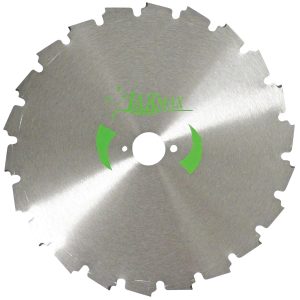
1. Chisel brushcutter blades
These are circular, with saw-tooth edges, capable of tackling the toughest brush, specifically wood, like branches and small trees. (We’ll discuss the importance of choosing the right number of teeth for these blades further on.)
2. Knife brushcutter blades
The most common of these are star-shaped blades with wide, knife-like spokes. They are suitable for clearing thinner and softer stems and undergrowth.
3. Mulching brushcutter blades
These blades are designed to disintegrate twigs, leaves and weeds to prepare them for composting. When you need to remove long, tough grass or overgrown weeds, these are also the blades to choose from, as they can deal with vegetation like vines that tend to wrap around knife brushcutter blades.
4. Smasher brushcutter blades
These are the wrecking balls among the different types of brush cutter blades. They either have heavier pivoting blades or use flails, with chains linked to round balls. They’re designed to deal with large growths of soft grass or watery weeds.
You can see the importance of selecting the right type of brushcutter blade, depending on exactly what you need to do in your garden.
Now let’s dive deeper into the details like blade tooth configurations, matching blades to your needs, and the factors to consider when choosing them. Plus aspects like blade safety and maintenance.
We’ll also explore some specialised types of brush cutter blades, give you recommendations from experts, and share user experiences. So that next time you need to clear some vegetation, you’ll know precisely which brushcutter blades to choose.
Brushcutter blade tooth configurations
We’ve mentioned the saw-toothed edges of chisel brushcutter blades, and the importance of tooth configurations. These are critical to the performance of your brushcutter.
Chisel blades are exactly like conventional round-saw blades. The teeth were traditionally made of steel, but tungsten carbide-tipped brush cutter blades are more common these days, due to the compound’s hardness and falling prices.
These blades come with varying numbers of teeth, and this plays a key role in creating optimal power efficiency. In other words, getting the job done most effectively.
Why less is more with blade tooth configurations
Perhaps counter-intuitively, the rule of thumb when choosing your tooth configuration is that the fewer there are the better, especially if you’re dealing with tough or woody vegetation.
If you’re cutting into less resilient vegetation, like thin saplings, having many blade teeth with do the trick nicely. However, if you try to cut through anything thicker with a high tooth configuration, you’ll soon find yourself pretty much getting nowhere. The teeth won’t bite sufficiently, plus you’ll lose a lot of the cutting power that the engine produces through slippage.
So the larger the diameter of the small tree you’re cutting, for instance, the fewer blades you’ll want. Having only one or two teeth in a branch prevents loss of power from the engine by concentrating it all on them.
It’s simple physics: when more teeth are cut into the blade, by necessity they have a shallower depth than two or three. There is only a limited amount of material to cut into. Fewer teeth thus mean longer teeth, which give more leverage, allowing them to apply more force.
Following these principles, you can choose from a wide range of tooth configurations for your brushcutter blades:
- 2 tooth blade
- 3 tooth blade
- 4 tooth blade
- 8 tooth blade
- 22 tooth blade
You can even get an 80-tooth blade for very fine clearing work.

- 2 tooth blade
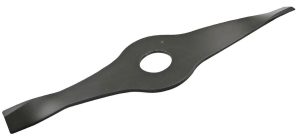
- 3 tooth blade
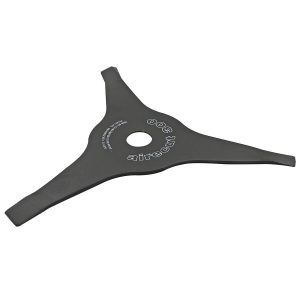
- 4 tooth blade
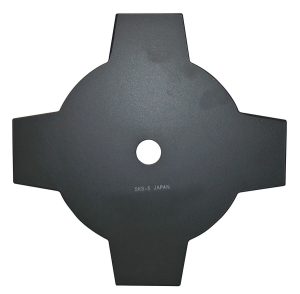
- 8 tooth blade
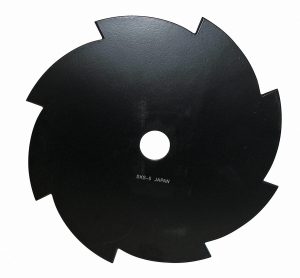
- 80 tooth blade
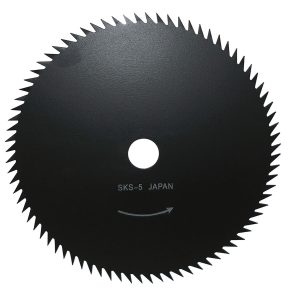
Specialised brush cutters with metal blades
You’ll also find some more specialised metal brushcutter blades, which convey particular advantages.
Scalloped blades
These blades have sharpened, recessed curves along the teeth. This creates sharper points than on a conventional chisel blade. They help the blade to dig in immediately on contact and create a more linear cutting surface. This provides the right balance between speed and cutting ability.
Tri cut blades
Tri cut blades are designed to cut through heavier grass or reeds, and can also deal with light scrub. These are longer blades that take advantage of their leverage-to-power ratio, giving you higher performance in this type of vegetation.
Clearing blades for tough vegetation
You can use clearing blades on light brush and saplings, up to roughly 6cm in diameter, which is pretty sizeable. A 22-tooth blade is the best option here, as it’s optimised for this kind of work.
You can also use a 22-tooth blade for mulching. It very easily slices through leaves and twigs and also can deal with larger branches.
The high number of teeth gives the blade a stable and regular cutting pattern and maximises the power that the engine supplies. This means that you don’t need as much effort to clear the vegetation.
Matching your brushcutter blade to your cutting needs
We’ve already seen how important it is to use the right brushcutter blades for the tasks at hand. You need to determine which type of blade is suitable to both the type and density of vegetation that you’re dealing with.
First off, do an inventory of your garden or the space you need to clear and identify the type of vegetation. This will tell you what type of blades to get – a chisel blade, knife blade, mulching blade or a smashing blade.
Then remember the “less is more” principle and choose blades that have just enough teeth for the job. We’ve explained that higher tooth-count blades are better for light vegetation like grass, while you’ll need even lower tooth counts as the vegetation gets thicker.
Other factors to consider when choosing brushcutter blades
You should also have a look at the different blade materials available.
The aforementioned tungsten carbide blades are extremely tough and efficient, while steel blades can be used for lighter clearing work.
Remember to take your brushcutter size into account, and make sure you get blades that are compatible with your specific model.
Blade safety and maintenance
As with any other combination of power tools and sharp edges, you need to take a few basic safety precautions when using brushcutter blades.
Safely handling your brushcutter
The first thing to do is what so many of us overlook – read your brushcutter’s manual. It will contain specific safety instructions for operating it with different blades, as well as which blades are safe to use.
Keep your hands as far from the turning blades as possible. For example, make sure that they have stopped spinning before you reach in to clear stuck vegetation.
You also should make sure that other people and animals are at least 10m away, and clear the area of visible foreign objects.
Some other safety tips:
- Be careful of small hard objects that can be thrown up, such as stones. It’s not a bad idea to wear knee-high boots or shin protectors, and a pair of goggles.
- Watch out for any signs of fuel spillage and sparking. Don’t use your brushcutter if you see these.
- Inspect the blades before use, to make sure they don’t have any cracks or worn mountings that could cause them to fly off.
- Don’t use a brushcutter in the rain.
- If you use your brushcutter often, consider getting some earplugs to avoid any hearing loss.
Tips to clean and maintain your brushcutter blades
Cleaning your brushcutter blades is usually a simple affair.
First, make sure that no power can go to the brushcutter, by shutting it down and taking out the battery pack. This will prevent you from accidentally switching it on at a finger-threatening moment.
Use a soft brush to remove loose debris, and then wash the blade in soapy water and dry it. That’s it.
Maintaining your blades is mostly a matter of keeping them sharp. All blades will dull with usage, so you’ll either have to sharpen them yourself or take them in for servicing. Tips when sharpening include wearing safety goggles and cut-resistant gloves.
Regularly inspect the blade guard and the front assist handle for cracks, and if they appear, replace them immediately before using your brushcutter again.
This kind of diligence will help ensure optimal performance and longevity for your blades.
Expert recommendations and insights
Here are some practical tips from professional brush cutters and home users.
Something that might not occur to you is the terrain in which you’re working. This can have a significant effect on both safety and efficiency when operating a brushcutter. Make sure you have a stable footing and can cut effectively.
Our dusty Australian conditions can also have an impact. Dust accumulated on vegetation can almost imperceptibly dull your blades. Blades with angled cutting tips can continue cutting for longer under these conditions.
Lastly, remember that the deeper you cut, the more you must ensure that the blade is slicing straight. If the blade twists when it’s embedded in a branch it can create a dangerous kickback effect on the brushcutter you’re holding. It can also damage the blade.
Brushcutter blade manufacturers
You can find several brands that manufacture brush cutter blades in Australia, including:
Things to remember
Match your choice of brushcutter blades to the vegetation you’re tackling, and investigate the best options, using our guide.
Decide which blade is most appropriate for your task: a chisel, knife, mulching or smasher blade. If you’re an avid gardener or a landscaper, it’s never a bad idea to keep various types of blades so you’ll always have the right one at hand.
Remember the “less is more” rule when it comes to choosing tooth configurations, and always keep your brushcutter properly maintained to avoid damage or injury.
And, most importantly, pay constant attention to the safety precautions.
FAQs
Can I use any brushcutter blade with my brushcutter?
Not all brushcutter blades are universal. You need to make sure the blade matches your brushcutter’s shaft size, guard, and power rating. Using the wrong blade can damage your machine or be unsafe. Always check your manual or ask your dealer which blades are compatible.
What’s the difference between nylon line and metal brushcutter blades?
Nylon line is best for trimming grass, lawn edges, and light weeds. Metal brushcutter blades are designed for heavier work, such as thick weeds, saplings, and woody vegetation. If you’re clearing tough growth, a blade is more effective than line, but for lawn care a nylon line trimmer is usually easier to use.
How do I know when my brushcutter blade needs replacing?
You should replace your blade if it’s cracked, bent, missing teeth, or stays dull even after sharpening. A worn blade won’t cut cleanly, can strain your engine, and increases the risk of kickback. Regularly inspect your blade before use to ensure it’s safe and effective.
Can I sharpen a brushcutter blade myself, or should I get it professionally sharpened?
Yes, you can sharpen a brushcutter blade yourself with a file or grinder, but you need to follow safety steps and maintain the correct angle. For tungsten carbide or heavily worn blades, professional sharpening is often a better option. Many landscapers keep a spare blade to swap in while one is being sharpened.
What protective gear should I wear when using a brushcutter blade?
Always wear safety goggles, gloves, long pants, sturdy boots, and ear protection when operating a brushcutter. A face shield and shin guards offer extra protection from flying debris. Safety gear is essential because blades can throw stones, sticks, and other hard objects at high speed.
How long do brushcutter blades last?
The lifespan of a brushcutter blade depends on what you’re cutting and how often you use it. A quality blade can last many months for light garden use, but heavy-duty work on hardwood or rocky ground may wear it out much faster. Regular cleaning and sharpening will extend its life.
Featured products
Our featured selection highlights the must-have inventory for your business. These fast-moving parts, high-performance accessories, and key whole goods are currently in high demand among all our customers!



 IN STOCK
Nut M5 x2 – Suits – Greenworks CU400
Nut M5 x2 – Suits – Greenworks CU400
PART NUMBER
R2300102-00
 IN STOCK
OEM Spec Belt – AYP/Husqvarna – 5/8″ x 86-1/4″ I.D
Secondary blade belt, Fits DPRZZ0 and PR22 with 48” decks. Fits AYP & Poulan Pro…
PART NUMBER
B1EP52
 IN STOCK
Bar & Chain – 200 Litre Oil
Bar & Chain – 200 Litre Oil. Our bar & chain oil is a good…
PART NUMBER
JM969
 IN STOCK
B167 Kevlar Belt – 5/8” W x 167” I.D
B167 Kevlar Belt
PART NUMBER
B167K
 IN STOCK
Tank Housing Assembly
TANK HOUSING ASSEMBLY-Model: 038,MS380
PART NUMBER
ST0454
 IN STOCK
Pan Head Screw
PAN HEAD SCREW-Model: 070,090
PART NUMBER
ST0319
Related articles


How to Choose the Right Brush Cutter in Australia – and Keep It Running with Quality Spare Parts
With our varied terrain, the matter of how to choose the right brush cutter in Australia isn’t as straightforward as…

How to Sharpen a Chainsaw Like a Pro (With Tools You Can Trust)
Chainsaws cut cleanly – if they’re sharp. To get the best performance out of yours, you need to know how…

How to Replace Your Trimmer Line: A Clear Guide for Aussie Gardeners
A whipper snapper is one of the best garden inventions ever. It’s extremely handy for all kinds of jobs, from…

How To Replace a Lawn Mower Blade: A Practical Guide for Aussie Homeowners
You might think that lawn mower blade replacement is a complicated affair, but it’s actually pretty simple to change a…

What Type of Oil Should You Use in a Lawn Mower?
It’s essential to choose the right lawn mower oil type to maintain optimal performance and longevity, and reduce the risk…
Ultimate Guide to Buy a Log Splitter (Australia)
A log splitter is the best tool for efficiently processing wood, with a range of power choices, depending on your…